
Call Now To Learn More About Your Legal Rights
(479) 227-3060 / (479) 412-HURT(Calls Answered 24/7) OR Text Us: (479) 358-1998
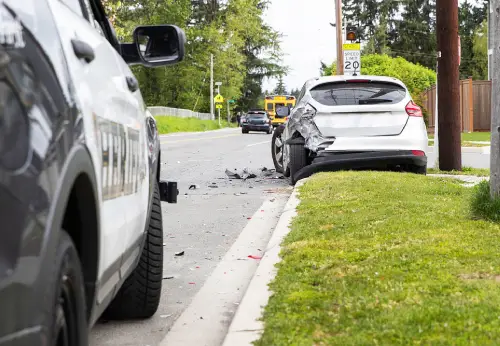
You may already be aware that your injuries could justify a claim, but what feels less clear is how the process actually works. Can you recover compensation if you share some of the blame? How will your losses be evaluated? Will pursuing a claim mean months of complex legal proceedings and courtroom appearances?
At Mullins & Blake Attorneys, we help you understand the full scope of your claim so you can maintain clarity throughout each step of the process. Whatever the case may be, our goal is to provide you with the information you need to make informed decisions about the future.
If you were involved in a car accident, get the answers you need by calling (479) 227-3060 or requesting a free consultation through our contact form.
If you were partially at fault, it is still possible to pursue a claim because of Arkansas’ comparative fault rule. For a viable case, your fault must be less than the combined fault of the parties from whom you’re seeking damages. In a typical two-driver collision, being 50% or more at fault prevents recovery from the other party.
If your share falls below that threshold, your recoverable damages are proportionately reduced. For example, if your damages are $40,000 and you are 25% at fault, the amount after the reduction would be $30,000, before fees, expenses, and other applicable deductions.
An insurer’s accusation alone does not settle the issue of fault. Photographs of the crash, witness accounts, vehicle damage, and other evidence also play a major role in establishing what happened. A qualified attorney can examine a disputed fault assessment and explain how it impacts your options moving forward.
 Call Now To Learn More About Your Legal Rights
(479) 227-3060

An evaluation considers both responsibility for the collision and the harm it caused. A diagnosis on its own doesn’t tell the whole story, and there is no one-size-fits-all settlement amount that applies to everyone who sustained the same injury.
Relevant losses typically include:
Medical records, employment information, and evidence of your recovery status all help support the legitimacy of these losses. Other factors that affect the evaluation are available insurance benefits, disputed liability, and questions surrounding whether or not the wreck caused a particular health condition.
An initial discussion with a member of our team gives us the opportunity to learn about the nature of your collision, injuries, treatment, and involved insurance companies. All you need to do is bring all the information and evidence you have – we’ll fill in the blanks for you.
If we take your case, we will get to work obtaining records, investigating fault, identifying coverage, and documenting losses. Once there is enough evidence to evaluate your damages, a settlement demand can be presented and negotiations can begin.
Call Now To Learn More About Your Legal Rights
(479) 227-3060

You don’t necessarily have to file a lawsuit or go to court. A claim can be resolved through just negotiation, but if liability remains disputed or you can't reach a settlement agreement, filing a suit may be appropriate. A lawsuit may also be needed to preserve your rights before a deadline.
It’s important to remember that filing doesn’t automatically mean a trial. Settlement discussions can continue throughout the litigation process. If your participation is needed for a deposition, mediation, or trial, we can explain what to expect and help you prepare for what’s next
Whether you are worried about fault or the potential for litigation, we can discuss your situation and create a practical plan of action as a team. To get started, contact Mullins & Blake Attorneys in Springdale, Rogers, or Fort Smith at (479) 227-3060 , or request a free consultation using our contact form.
Call Now To Learn More About Your Legal Rights
(479) 227-3060


