
Call Now To Learn More About Your Legal Rights
(479) 227-3060 / (479) 412-HURT(Calls Answered 24/7) OR Text Us: (479) 358-1998
In this article, you will discover:
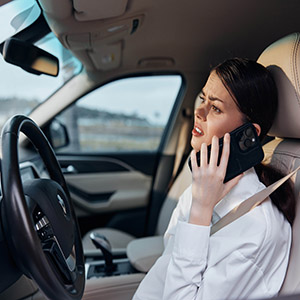
Cellphone or electronic use qualifies as distracted driving, whether you’re texting, dialing a phone number, or looking up something on the internet. Other examples include looking down because you dropped something, eating, drinking or not paying attention to the road while putting on makeup.
All of these behaviors take your attention away from the critical task at hand: focusing on the road and ensuring you don’t hurt anybody with your vehicle.
It’s difficult to obtain solid evidence about distracted driving unless you file a lawsuit and request cell phone records. These records can show whether messages or phone calls were made at the time of the accident, or there may be dashcam footage that proves the driver’s distraction. In most cases, insurance companies won’t turn over that evidence willingly without a lawsuit being filed.
Often, you can’t get that evidence, and proving distracted driving comes down to witness testimony. Witnesses can testify that the driver who caused the wreck was looking down at their phone or reaching into the back seat to pick something up.
That’s why it’s so important to involve an experienced car wreck lawyer early in a personal injury case, who can talk to those witnesses and preserve their testimony.

Attorney Bradley Mullins is a skilled lawyer based in Springdale, Rogers and Fort Smith, Arkansas, who has helped countless clients like you navigate the intricacies of personal injury law. With years of experience, he is prepared to assist you with obtaining full and just compensation when a distracted driver injures you in a car accident.
Still have questions? Ready to get started? Contact Mullins & Blake Attorneys today to schedule an initial consultation.
Most car insurance policies exclude punitive damages to punish a bad driver. They can provide a settlement for your medical bills, pain and suffering and lost wages. However, that doesn’t mean that distracted driving doesn’t make a case more valuable.
If you have a distracted defendant driver who caused a wreck, you can bring that up at trial. Even if it doesn’t get you more money, it makes an insurance company more likely to avoid trial by paying a fair settlement to keep that information from coming in front of a jury and making the defendant look bad.
Evidence of distracted driving will typically result in a higher award, even if you can’t get punitive damages against the at-fault driver. No jury will feel sorry for them because they were not paying attention as they should have.
A personal injury attorney can follow up on witness contact information, obtain video evidence and gather all the witness statements.
It’s particularly useful if the police officer issues a ticket for distracted or reckless driving. Then, if you’re adamant about it, your attorney can send a preservation request to have the other party preserve all phone records.
If the at-fault driver doesn’t preserve those records, your attorney can use that failure as a spoliation jury instruction. In other words, you can use that against them at trial.
The key point is to preserve all the evidence you can at the time of the accident.
For more information on distracted driving accidents in Arkansas, an initial consultation is your next best step. Get the information and legal answers you are seeking by calling (479) 227-3060 | (479) 412-HURT today.
Attorney Bradley Mullins is a skilled lawyer based in Springdale, Rogers and Fort Smith, Arkansas, who has helped countless clients like you navigate the intricacies of personal injury law. With years of experience, he is prepared to assist you with obtaining full and just compensation when a distracted driver injures you in a car accident.
Still have questions? Ready to get started? Contact Mullins & Blake Attorneys today to schedule an initial consultation.


